



Solar panel installation service · India-wide · Operating since 2020
Blues Renewables, solar panel installation in Tamil Nadu, handled end to end
Blues Renewables designs, supplies, installs and commissions solar for factories, businesses and homes across India — engineering, ALMM-listed hardware, DISCOM approvals, net metering and the subsidy claim where one applies. Two years of maintenance are included with every installation rather than sold back to you afterwards.
Commercial and industrial systems are quoted after a load study, not from a web form. How our EPC process works →
₹78,000
central subsidy claimed and followed to your bank account by us
Two years free
cleaning, inspection and monitoring from commissioning
25 year panels
manufacturer performance warranty, passed through in full
3 kW to 100 MW
rooftop, ground mount and subcontract EPC across India
The short answer
What does a solar panel installation service include?
A full solar panel installation service covers the site survey and energy audit, system design, supply of ALMM-listed panels and inverters, structure and electrical work, DISCOM approval and net metering, the subsidy claim where one applies, and maintenance after commissioning. In India a turnkey rooftop installation costs roughly ₹55,000 to ₹80,000 per kW below 10 kW, and less per kW as the system grows. Residential systems qualify for a PM Surya Ghar subsidy of up to ₹78,000.
01
What does solar panel installation cost in India?
Installed cost is quoted per kilowatt, and it falls as the system grows. A small rooftop system carries the same fixed costs — survey, structure design, approvals, a crew on site — spread over very few panels. A megawatt plant spreads them over thousands.
| System scale | Typical installed cost | What it suits |
|---|---|---|
| 3 kW to 10 kW rooftop | ₹55,000 – ₹80,000 per kW | Homes, villas and small shops. The band where the PM Surya Ghar subsidy of up to ₹78,000 applies, so the net figure is far lower than the gross. |
| 10 kW to 100 kW rooftop | ₹45,000 – ₹60,000 per kW | Showrooms, clinics, schools, apartment common areas and small production units. No central subsidy, but accelerated depreciation and GST input credit apply. |
| 100 kW to 1 MW | ₹40,000 – ₹52,000 per kW | Factory sheds, hospitals and campuses. HT metering, transformer and protection scope start to matter as much as the modules. |
| 1 MW and above, ground mount | ₹3.6 – ₹4.5 crore per MW | Captive, open access and IPP plants. Land, evacuation distance and the transformer and switchyard scope move this figure more than module price does. Cost per MW → |
GST is about 8.9% on a turnkey job
Solar goods are taxed at 5%. On a complete installation the 70:30 composite supply rule applies — 70% of the value as goods at 5%, 30% as services at 18% — giving an effective rate near 8.9%. Buying components separately can attract 18%.
What actually moves the price
Structure height and roof type, cable run length from array to inverter to meter, earthing and lightning protection, and whether the sanctioned load has to be enhanced first. Module brand matters less than most quotes imply.
A cheap quote is usually a short quote
The lines most often missing: earthing and lightning arrester, AC and DC protection, a second generation meter where the state requires one, walkways on sheet roofs, and the DISCOM liaison itself.
02
Commercial solar, where the arithmetic works differently
A business roof is not a bigger house roof. Commercial consumers pay higher tariffs than households, consume most of their electricity in daylight hours, and can claim tax benefits a homeowner cannot — but they receive no residential subsidy and are treated differently on export. Those four facts change the sizing, the paperwork and the case itself.
CAPEX vs OPEX vs RESCO covers how to fund it, and appointing an EPC contractor covers how to buy it.
Three things every commercial proposal should state plainly
No PM Surya Ghar subsidy
The central residential subsidy does not extend to commercial connections anywhere in India. Anyone quoting it on a business roof is quoting a number you will not receive.
Accelerated depreciation instead
Up to 40% of the asset value can be claimed in year one, plus GST input credit where you are registered. Whether you can use it depends on your tax position — your accountant decides that, not us.
Export is worth less than self-consumption
Most states put non-domestic consumers on net billing or gross metering rather than one-for-one net metering, so exported units earn well below the tariff you pay on imports. That is the whole argument for sizing to your own daytime load.
Segments we work with
Showrooms and retail
Jewellery, apparel, furniture and automobile showrooms. Trading hours run late, so the honest coverage figure is lower than a generic proposal suggests — and a carport often does more than a roof.
Retail showrooms →Hospitals and clinics
Cooling load peaks exactly when the array peaks. The design question is the tie-in with DG and UPS switchgear, and phasing work around clinical areas.
Hospitals →Schools and colleges
A timetable is a load profile. Teaching hours sit almost exactly inside generating hours, and the vacation is the installation window worth planning for.
Schools and colleges →Offices and IT premises
Consumption sits squarely in office hours, which is close to an ideal match for rooftop generation. Landlord consent and roof access rights are usually the long pole, not the engineering.
Commercial EPC →03
Industrial solar, and why a factory is not just a larger commercial site
Industrial consumers are typically on HT connections with contract demand measured in kVA, where the bill combines an energy charge with a demand charge, power factor incentives and time-of-day variation. Rooftop solar reaches the energy charge. It does not reliably reach the rest — and being straight about that at the survey is the difference between a proposal that holds up and one that does not.
Demand charges are not displaced
An HT bill combines an energy charge per unit with a demand charge on contract or recorded maximum demand. Solar reduces what you pay per unit, not what you pay for the right to draw power.
Multi-shift plants consume outside generating hours
A single-shift day operation is close to an ideal solar match. A two or three shift plant draws heavily at night, when the array produces nothing. Both facts belong in the model.
The roof is finite, the load is not
A plant drawing several hundred kVA cannot be served from its own roof, however large the shed. The right response is to size rooftop to what it genuinely offsets, then look at ground mount or open access for the rest.
Sheet roofs are a structural question
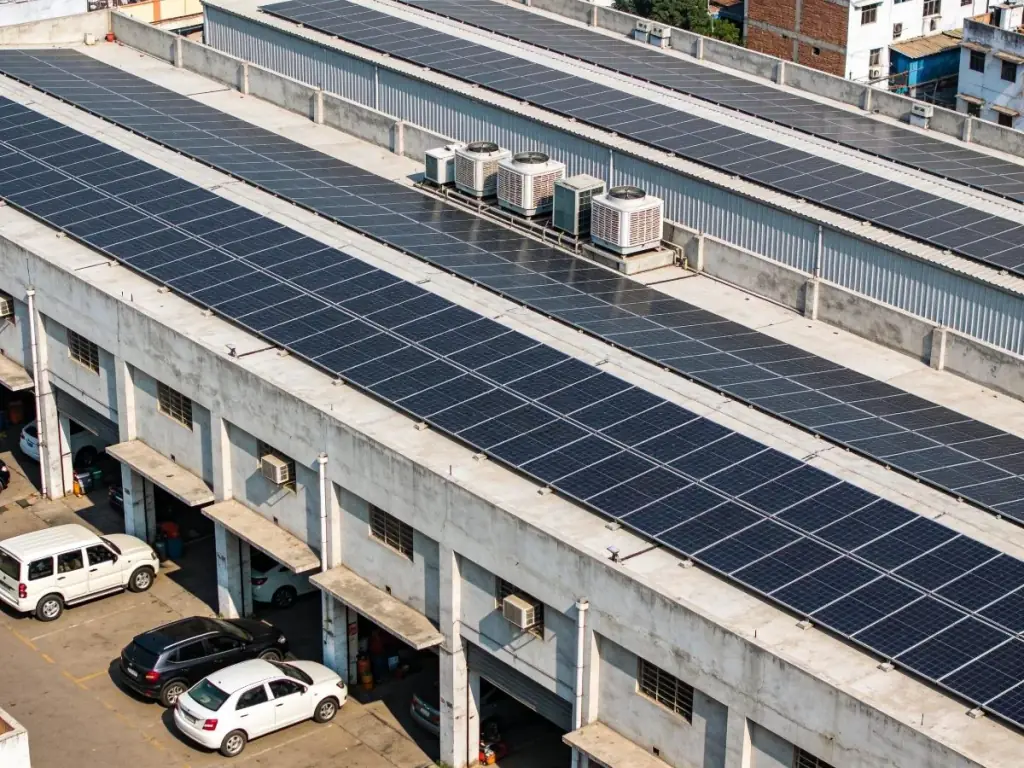
Most industrial roofs are profiled metal sheet over steel purlins. Purlin spacing, load capacity and the remaining life of the sheeting decide the design before anything else does.
Beyond the roof
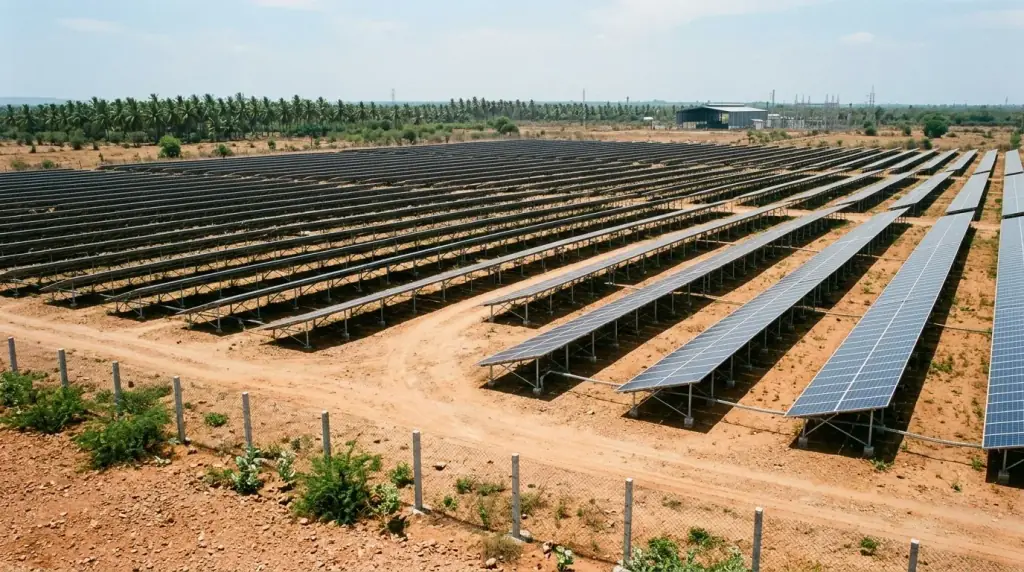
When the load outgrows the shed, the next step is a ground-mount plant — captive, group captive or open access. We build these ourselves and also work as a subcontract EPC for developers who need a crew that can deliver to drawing.
Commercial and industrial systems are quoted after an energy audit, never from a bill figure. Roof type, structure, tie-in point and tariff category move the answer too much to price any other way. Send twelve months of bills and we will tell you what your site can actually carry.
Request an audit04
Residential solar, and the subsidy that comes with it
Homeowners are the one segment with a cash subsidy. Under the PM Surya Ghar Muft Bijli Yojana the central government pays a fixed amount per kilowatt, direct to your bank account after the system is inspected and commissioned. It is the same in every state, and it applies to residential connections only.
₹30,000
1 kW system
Rarely the right size for a house. Suits a very low consumption home or a single-floor tenant meter.
₹60,000
2 kW system
About 100 sq ft of shade-free roof. Fits a small home running fans, lights, a fridge and one air conditioner sparingly.
₹78,000
3 kW and above — the ceiling
The subsidy stops rising at 3 kW. A 5 kW or 10 kW system receives exactly the same ₹78,000, so every kilowatt above the third is paid for in full.
30–45
days to your account
Paid by direct benefit transfer after inspection and commissioning, not deducted from the invoice. Hardware must be ALMM-listed or the claim fails.
On state top-ups, plainly
The central subsidy is identical in every state. A handful of states have added their own top-up at various points, and those schemes open, close and change amount without much notice. Plenty of installer websites still quote top-ups that no longer exist. We check your state's current position on the National Portal at the survey, and we never build a state incentive into a quotation until it is confirmed in writing.
The systems we install for homes
On-grid
The default where the grid is reliable. No batteries, lowest cost per unit generated, and the only configuration the subsidy is designed around.
On-grid systems →Hybrid, with battery backup
On-grid economics with a battery buffer for outages. Worth it if you work from home or run medical equipment; otherwise the battery is the most expensive part of the system.
Hybrid systems →Off-grid
For farmhouses, remote sites and anywhere without a usable connection. Sized against your worst week of weather, not your average one.
Off-grid systems →Apartments and societies
Common area solar for lifts, pumps, corridor lighting and STP loads — where most of an association's bill actually sits. A resolution is needed before the terrace can be used.
Solar for apartments →05
What changes from state to state
The subsidy does not change. Three other things do, and together they decide whether a system pays back in four years or seven: how much sun the site gets, what you currently pay per unit, and how your DISCOM handles the meter. Pick your state to see what a standard 3 kW system does there.
A 3 kW system in Tamil Nadu
4,650 units a year
worth roughly ₹29,100 a year at the mid-point of the domestic tariff band, against a net cost near ₹1.32L after subsidy.
Indicative only. Yield varies with site, shading and soiling; the tariff mid-point is a blunt instrument compared with your actual slab.
| State | Main DISCOMs | Yield, kWh/kWp/yr | Domestic tariff | 3 kW generates |
|---|---|---|---|---|
| Tamil Nadu | TNPDCL (TANGEDCO) | 1,500 – 1,600 | ₹4.5 – ₹8.0 | 4,650 units |
| Karnataka | BESCOM, MESCOM, HESCOM, GESCOM | 1,550 – 1,650 | ₹5.0 – ₹8.5 | 4,800 units |
| Andhra Pradesh | APSPDCL, APEPDCL, APCPDCL | 1,550 – 1,650 | ₹4.0 – ₹9.5 | 4,800 units |
| Telangana | TGSPDCL, TGNPDCL | 1,550 – 1,650 | ₹4.0 – ₹9.0 | 4,800 units |
| Kerala | KSEB | 1,400 – 1,500 | ₹4.0 – ₹8.5 | 4,350 units |
| Maharashtra | MSEDCL, Adani Electricity, Tata Power, BEST | 1,500 – 1,600 | ₹5.0 – ₹11.0 | 4,650 units |
| Gujarat | UGVCL, MGVCL, PGVCL, DGVCL | 1,600 – 1,700 | ₹4.0 – ₹7.0 | 4,950 units |
| Rajasthan | JVVNL, AVVNL, JdVVNL | 1,650 – 1,750 | ₹5.0 – ₹9.0 | 5,100 units |
| Madhya Pradesh | MPPKVVCL, MPMKVVCL | 1,550 – 1,650 | ₹5.0 – ₹8.0 | 4,800 units |
| Uttar Pradesh | UPPCL — MVVNL, PVVNL, DVVNL, PuVVNL | 1,450 – 1,550 | ₹5.5 – ₹7.5 | 4,500 units |
| Delhi NCR | BRPL, BYPL, TPDDL | 1,450 – 1,550 | ₹3.0 – ₹8.0 | 4,500 units |
| Haryana | DHBVN, UHBVN | 1,500 – 1,600 | ₹3.0 – ₹7.5 | 4,650 units |
| Punjab | PSPCL | 1,500 – 1,600 | ₹5.0 – ₹8.0 | 4,650 units |
| West Bengal | WBSEDCL, CESC | 1,250 – 1,350 | ₹5.0 – ₹9.0 | 3,900 units |
| Odisha | TPCODL, TPWODL, TPSODL, TPNODL | 1,400 – 1,500 | ₹4.0 – ₹7.0 | 4,350 units |
Net metering rules are set by each state's regulator, not by the centre. The common pattern for a domestic connection is one-for-one credit against imported units up to a capacity cap, with the system not exceeding your sanctioned load. Commercial and industrial connections are more often on net billing or gross metering, where exports earn a lower fixed rate. We confirm the applicable rule with your DISCOM before design, because it decides whether the system should be sized to your annual consumption or only to your daytime load.
06
Five steps, and we do the paperwork in all of them
Every installation runs through the same five stages: site assessment and energy audit, system design, installation, approval and commissioning, then monitoring and maintenance. Six to ten weeks is typical for a rooftop system from survey to a live, net-metered plant, and the DISCOM approval and meter account for most of it. The physical installation takes one to three days.
Step 01 · Week 1 · free
Site assessment and energy audit
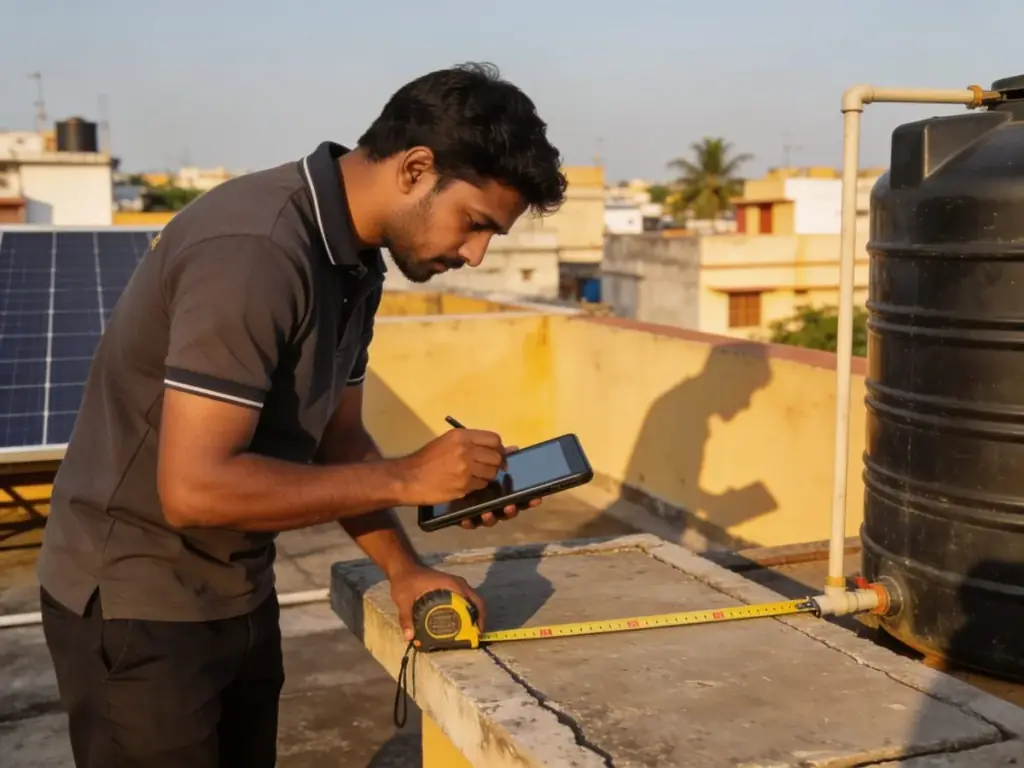
We measure usable shade-free area, check the structure, the existing meter and your sanctioned load, photograph shading obstructions across the day, and read your consumption pattern from twelve months of bills. The audit is what stops a system being oversized, undersized, or sized to whatever the installer had in stock.
Step 02 · Week 1 – 2
System design and an itemised quote
You get a system sized to your actual load, an itemised quote naming every component and brand, expected annual generation at your site, and the post-subsidy cost where a subsidy applies.
Step 03 · 1 to 3 days on site
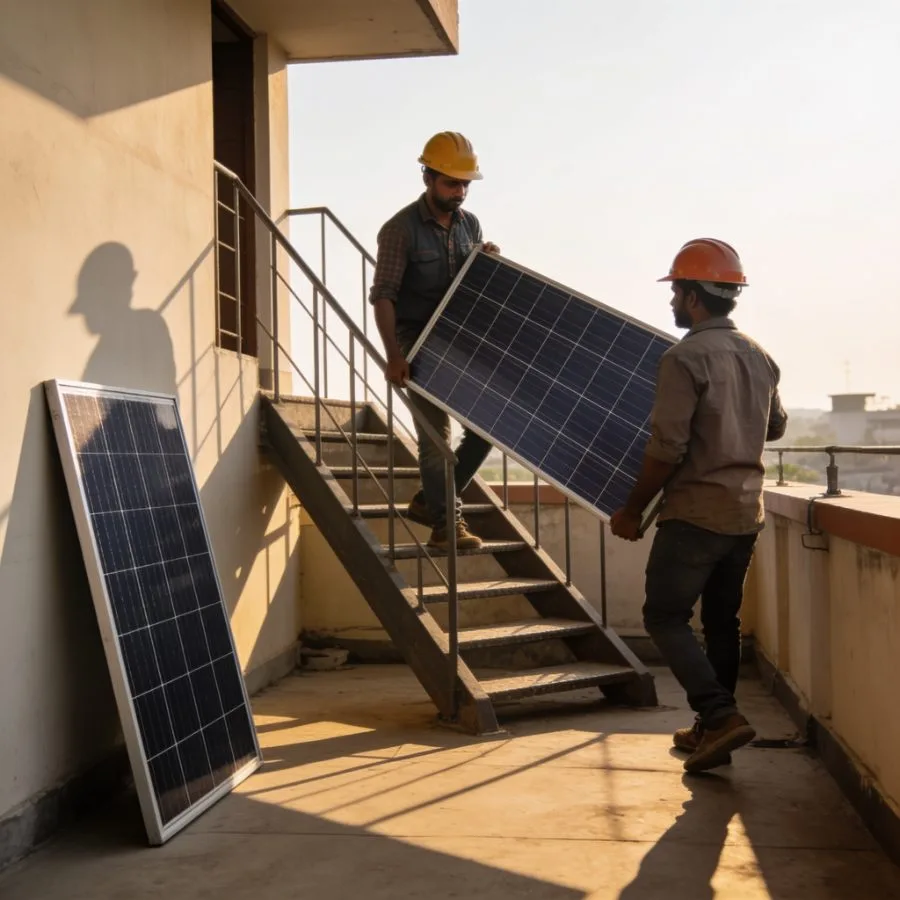
Installation
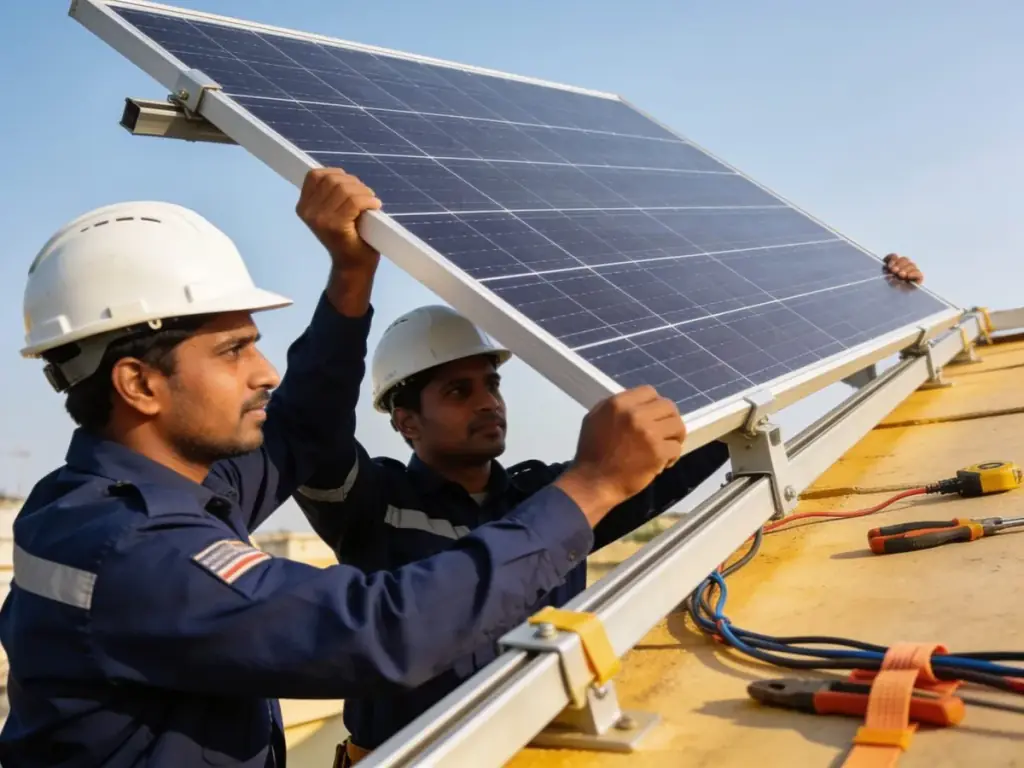
Structure, modules, inverter, cabling, earthing and safety gear. Our own crew does the work — we do not hand the roof to a third party and pass you their warranty. Larger plants are phased around your production or trading hours.
Step 04 · 4 to 8 weeks · we file it
Approval, net meter and the subsidy claim
DISCOM application and inspection, the bi-directional meter, and the system switched on. Where the property is residential, we file the PM Surya Ghar claim and track it to your bank account.
Step 05 · Years 1–2 · included
Monitoring and maintenance
Two years of free maintenance, generation monitoring and warranty coordination. Most installers hand over a system and disappear.
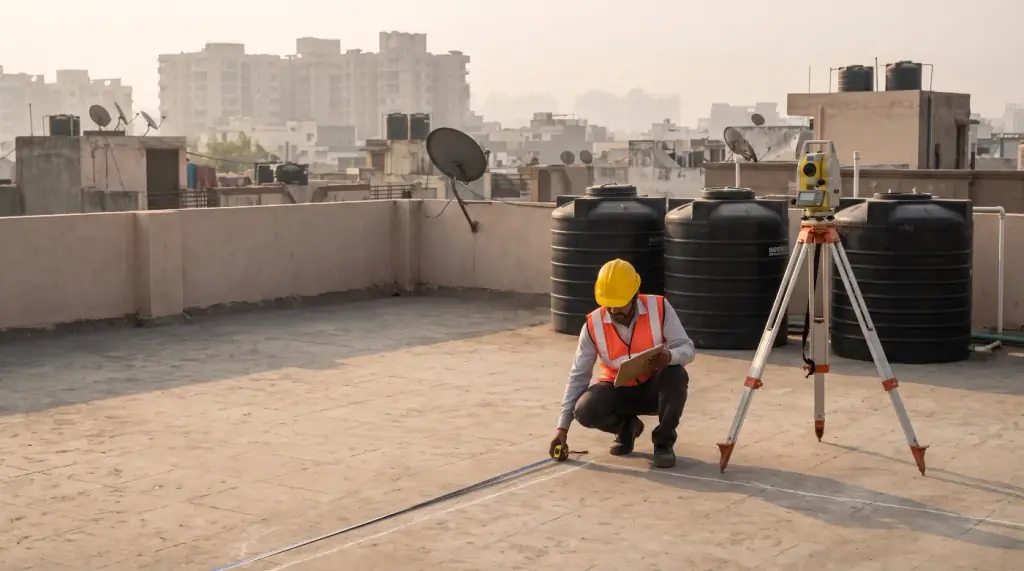
Step three, on site
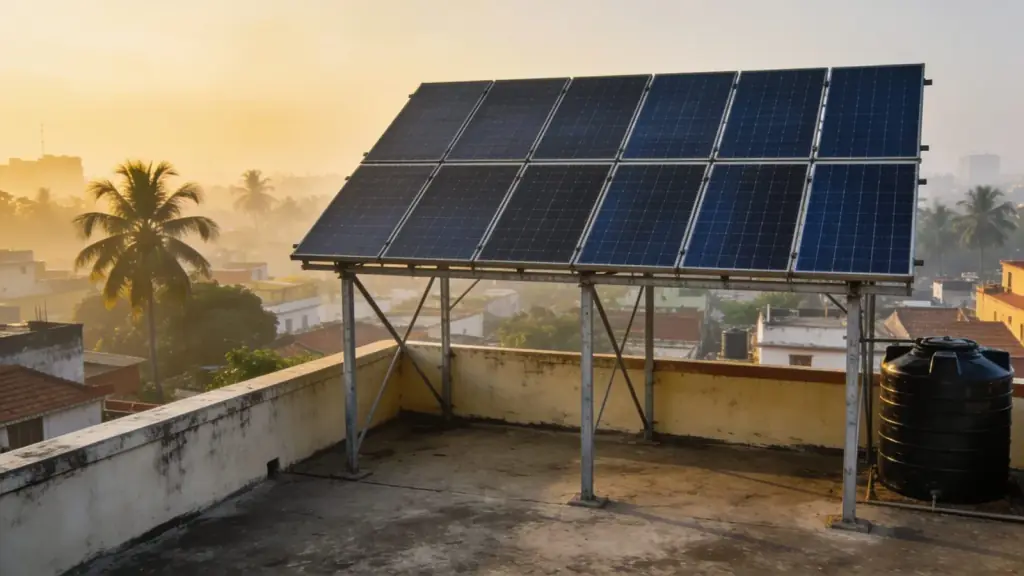
Installation itself takes two to three days
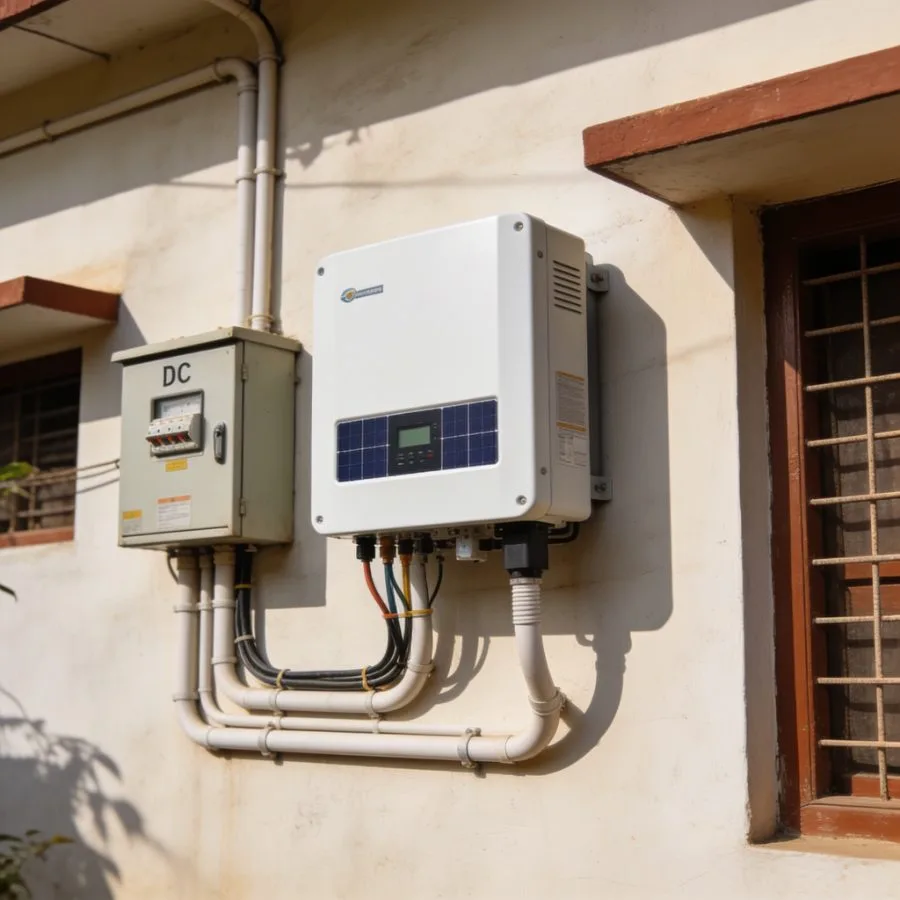
Structure first, then modules, then DC and AC cabling, earthing and the inverter. The crew that surveys the site is the crew that builds it.
How does net metering work?
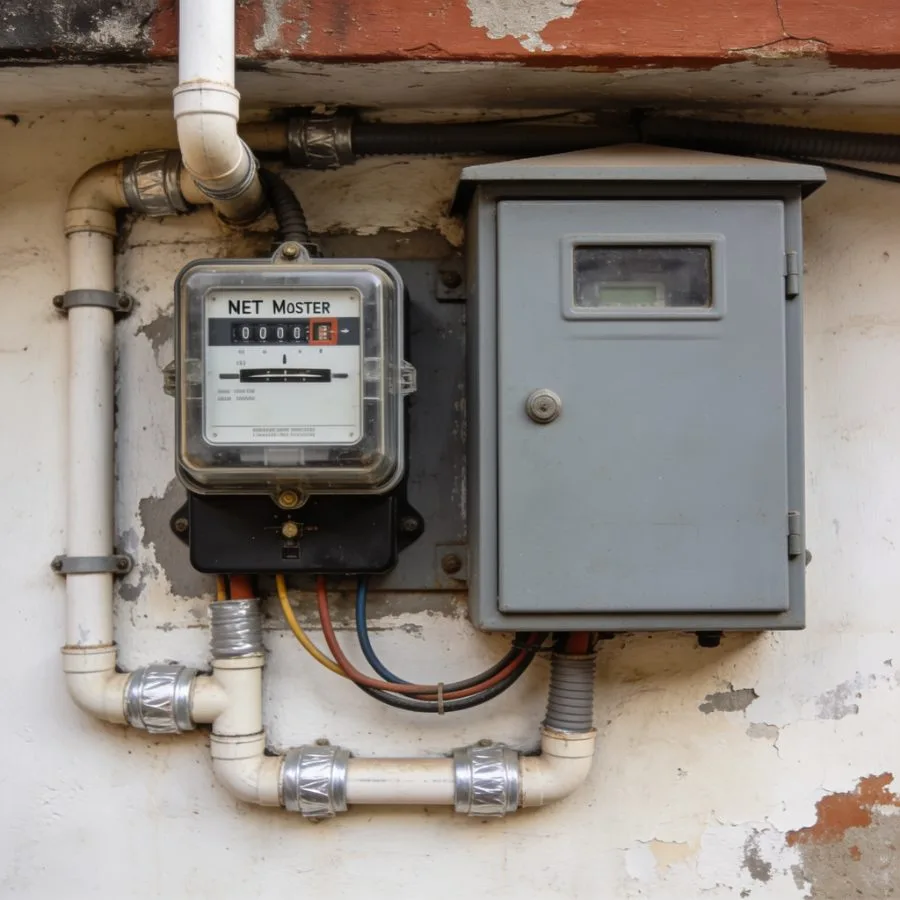
Net metering replaces your existing meter with a bi-directional meter that records both the power you draw from the grid and the surplus your system exports. Exported units are credited against your consumption in the billing cycle, and unused credits carry forward to the next one. Your system capacity cannot exceed your sanctioned load — the single most common reason applications are held up anywhere in the country.
Net metering, net billing and gross metering are not the same
Net metering credits exports one for one against imports and is the most valuable for a household. Net billing pays a lower fixed rate for exports. Gross metering sells everything you generate at a set tariff. Which one applies is decided by your state regulator and your consumer category, not by you or your installer.
Credits carry forward, then settle
Surplus units carry forward as credit through the year. Whatever remains at the annual settlement is paid out at a rate the regulator fixes, and that rate is well below retail. This is why oversizing a system far beyond your own consumption rarely pays for itself.
Capacity cannot exceed sanctioned load
If your sanctioned load is lower than the system you want, the load enhancement has to be filed first. We check this at the survey rather than discovering it at inspection.
Some states want two meters
Several states require a separate solar generation meter alongside the bi-directional net meter. Any quote that leaves it out in a state that requires one is incomplete, and you will pay for it later.
07
How to choose a solar installation company
Installers are separated by six checkable things, and price is not one of them. Ask everyone on your shortlist for evidence of all six before you compare rupee figures. We are happy to be compared on every one.
What every installation includes
- An itemised quotation naming every component, brand, wattage and specification.
- DISCOM approvals, net metering and the subsidy claim, filed and followed up by us.
- Two years of free maintenance from commissioning.
- Manufacturer performance warranties passed through in full, plus our own workmanship warranty in writing.
Credentials
- MSME registered, installing since 2020. Udyam registration UDYAM-TN-02-0495778, verifiable on the Government of India Udyam portal.
- An itemised invoice on every project, raised under the registered entity.
- Own crews for rooftop work; vetted partner crews under our supervision for sites outside our home region.
- Subcontract EPC for developers who need execution capacity against their own drawings.
Standards we build to
- ALMM-listed modules and MNRE-approved inverters, which is what a subsidy claim requires.
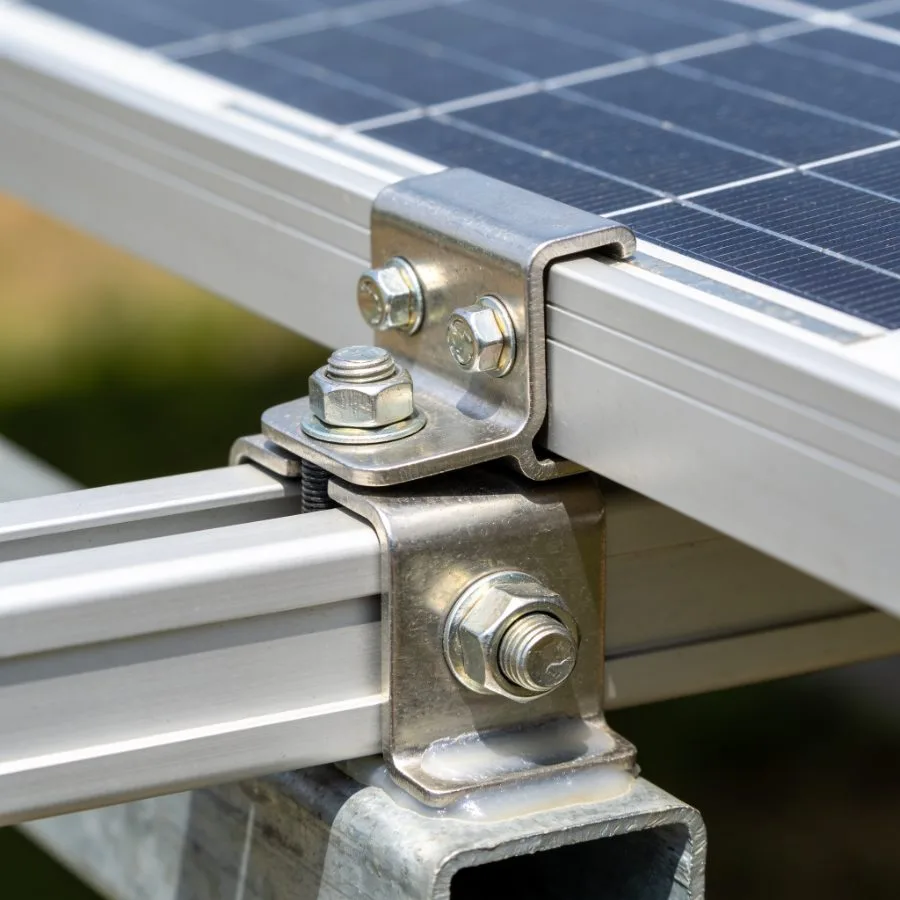
- Mounting designed to the IS 875 Part 3 wind zone for the site, with IEC 61701 salt mist certification on coastal properties.
- Dedicated earthing and lightning protection on every array, not as an upsell.
Hardware from brands you already know
We install and service equipment from Vikram Solar, Waaree, Adani Solar, Jinko Solar, Loom Solar, UTL Solar, Polycab and Havells. Every panel we quote is ALMM-listed, so a subsidy claim is never put at risk by the hardware, and you can check any model number against the MNRE list yourself before signing.
 Vikram Solar
 Waaree
 Adani Solar
 Jinko Solar
 Loom Solar
 UTL Solar
 Polycab
 Havells
08
Where we install
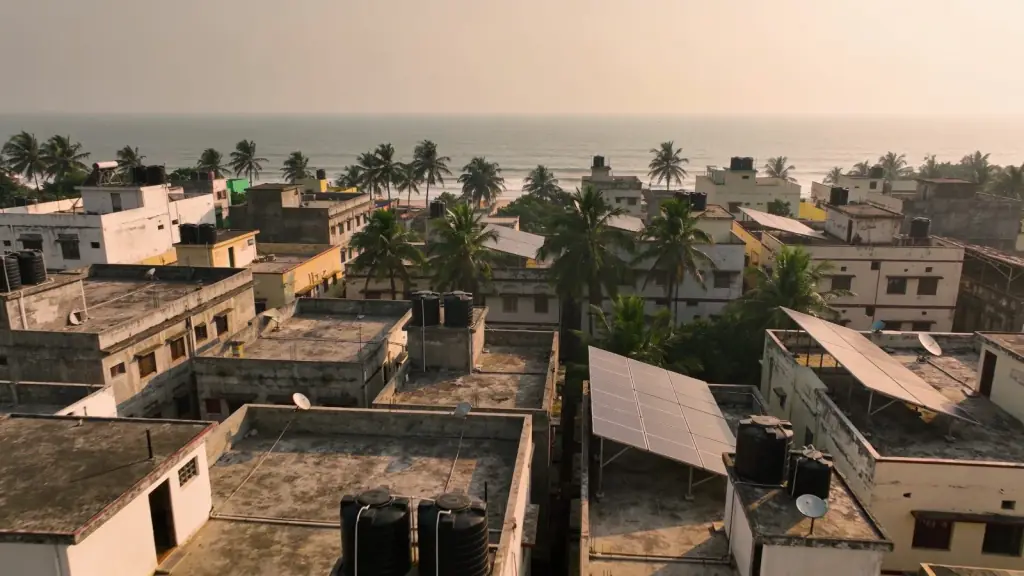
Our own crews cover Tamil Nadu and the neighbouring states. Beyond that we deliver with partner crews working to our drawings and under our supervision, with the design, procurement, DISCOM file and warranty staying with us. Rooftop enquiries outside our own crew radius are taken on a project basis rather than a lead-generation one — we will tell you plainly if a local installer is the better answer for a 3 kW roof.
Pages by location
We publish detailed local pages where we hold our own crews, covering the DISCOM process, tariffs and site conditions for that district.
Free site assessment
Find out what your site can do
Send us your state and your electricity bill. We will tell you the system size the site needs, what it costs after any subsidy you qualify for, and what the bill looks like afterwards. No charge, no obligation, and an engineer on the call rather than a salesperson.
Everything we install
Solar solutions in Chennai, and where to start
Most people arrive knowing their problem, not the product name. Pick the situation that fits. For system types, see on-grid vs off-grid vs hybrid.
- I own a house and want to cut my EB billSolar for your home →
- I live in an independent house with a terrace I useSolar for independent houses →
- I live in a flat, or run an apartment associationSolar for apartments and societies →
- I run a business, shop or officeCommercial solar EPC →
- I run a factory or manufacturing unitIndustrial solar →
- I manage a school or collegeSolar for schools and colleges →
- I manage a hospital or clinicSolar for hospitals →
- I run a showroom or retail chainSolar for retail showrooms →
- I want to know what it costsSolar panel prices in Chennai →
- I want to know about the subsidySolar subsidy in Tamil Nadu →
- I want backup during power cutsHybrid solar systems →
- I have no grid connection, or an unreliable oneOff-grid solar systems →
Beyond rooftop panels
Solar street lights
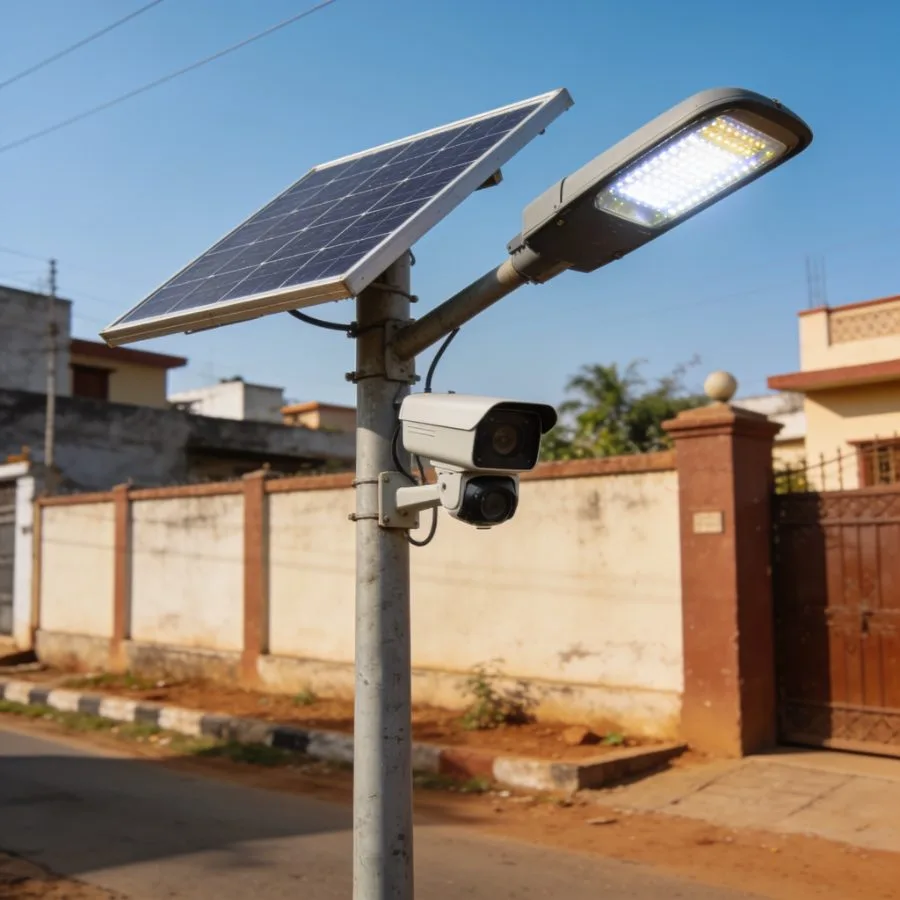
Standalone solar street lighting for gated communities, apartment complexes, factory perimeters, layouts, schools and campuses. Each unit runs on its own panel and battery, so there is no wiring back to a meter, no TANGEDCO application and no addition to your electricity bill. More →
Solar-powered CCTV
Surveillance at locations without convenient power: perimeters, gates, construction sites, remote plots and campus boundaries. Runs independently of the grid, which also means it keeps working through an outage.
Solar carports and canopies
Elevated structures over parking areas and forecourts carrying the array, generating power while shading vehicles. Suits showrooms, factories, apartment complexes, hospitals and campuses where roof area is limited.
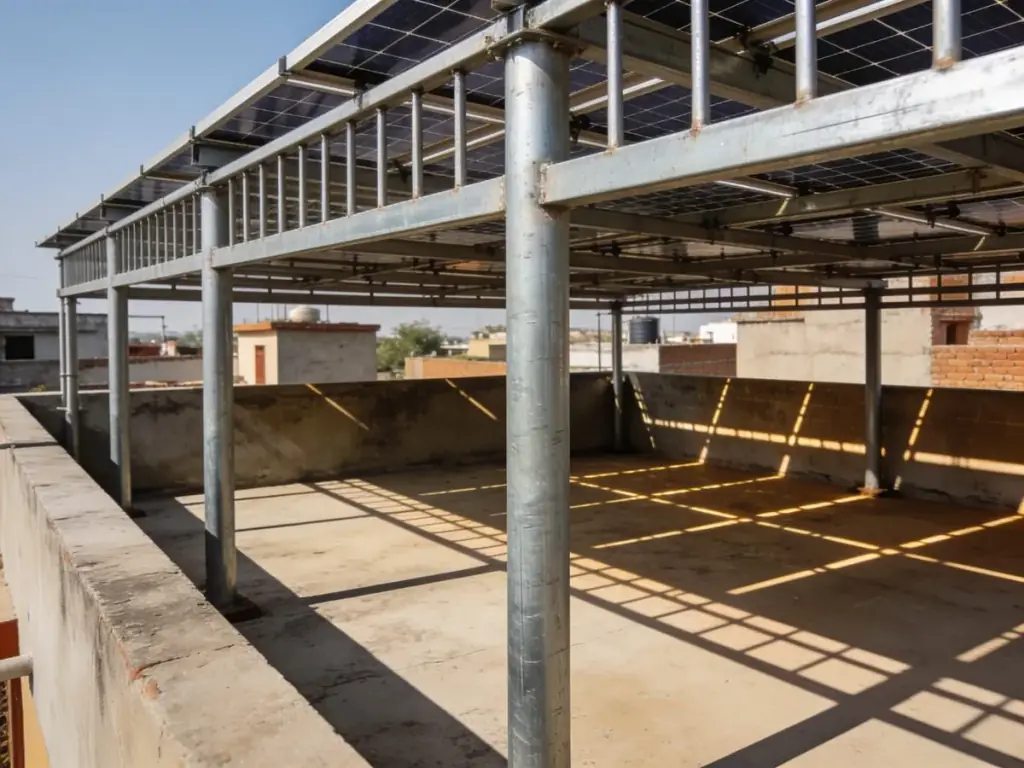
Elevated mounting structures
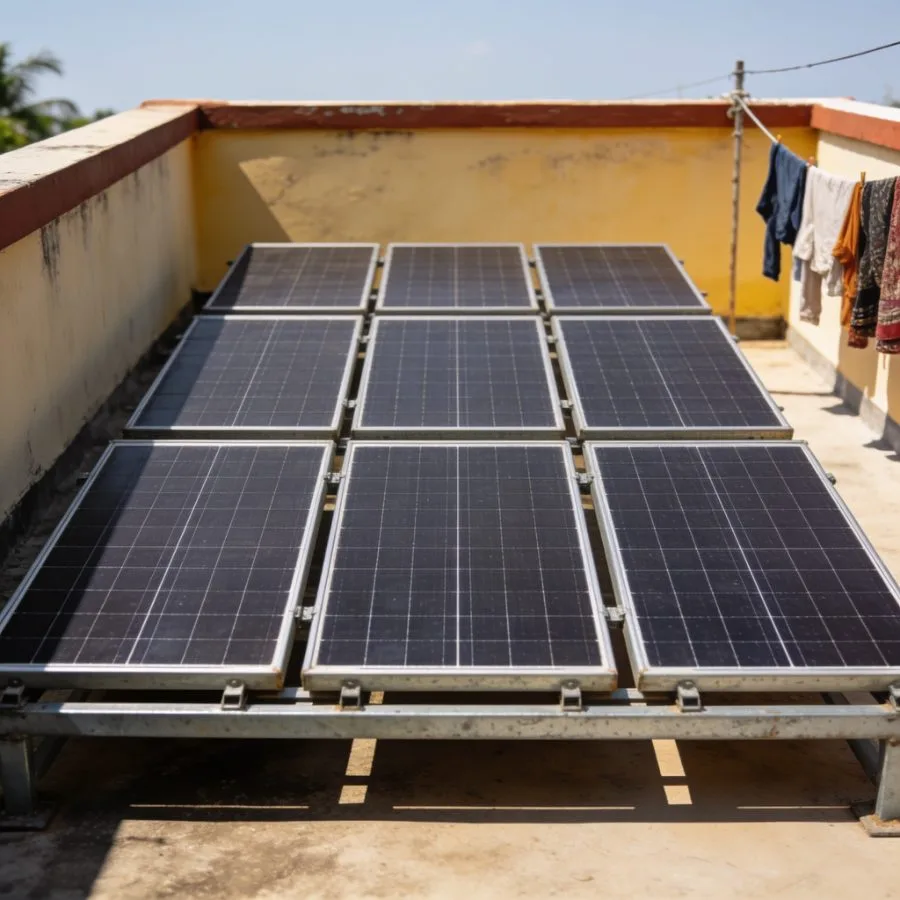
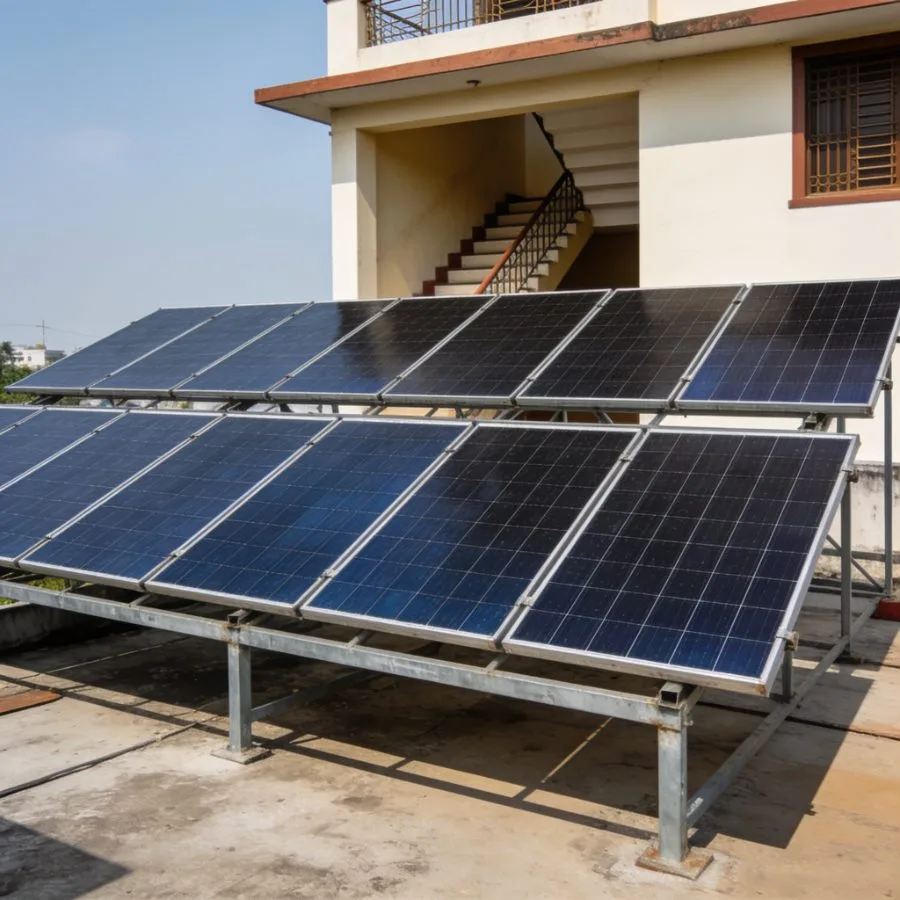
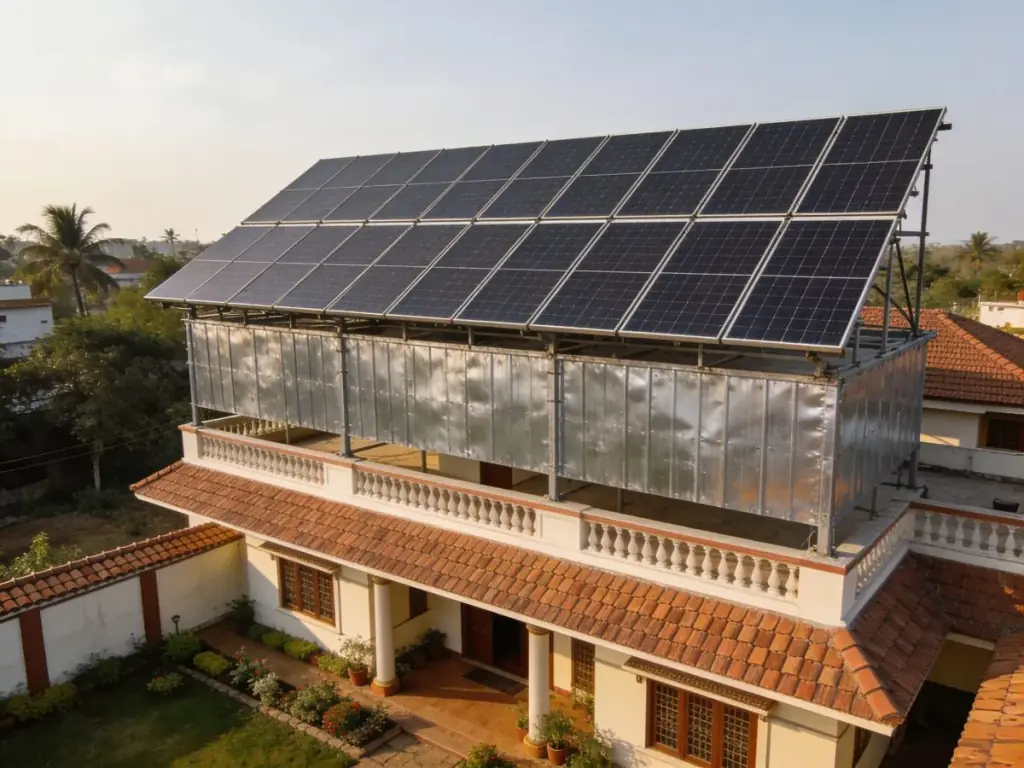
Raised structures up to 9 feet that keep the space underneath usable. On a house it preserves the terrace; on an apartment it preserves resident access. Panels also run cooler with airflow beneath them.
Battery backup and storage
Battery systems added to hybrid installations, sized to the loads that genuinely need to ride through an outage rather than to the whole property, which is what keeps the cost sensible. More →
What we do besides installing panels
Energy audit
Twelve months of consumption analysed for load pattern, tariff category, sanctioned load and, for businesses, demand profile. This is where the system size is decided. Free before any proposal.
Design and engineering
Electrical and structural design in-house, including mounting designed for Chennai's 50 m/s wind zone and salt mist specification for coastal properties.
Approvals and subsidy
TANGEDCO net metering, sanctioned load enhancement, three-phase conversion where needed, and the PM Surya Ghar subsidy filed and followed through to disbursal. You sign, we file.
Maintenance and monitoring
Two years of maintenance included with every installation, covering cleaning, annual inspection and warranty coordination, with generation monitoring benchmarked at handover. AMCs available afterwards.
Common questions
Solar panel installation, common questions
How much does solar panel installation cost in India?
A turnkey rooftop installation runs about ₹55,000 to ₹80,000 per kW below 10 kW, ₹45,000 to ₹60,000 per kW between 10 kW and 100 kW, and ₹3.6 crore to ₹4.5 crore per MW for ground-mount plants. A 3 kW home system therefore lands near ₹1.65 lakh to ₹2.4 lakh before subsidy, and roughly ₹87,000 to ₹1.62 lakh after the ₹78,000 PM Surya Ghar subsidy. Effective GST on a turnkey job is about 8.9% under the 70:30 composite supply rule. The final figure depends on structure height, roof type, cable runs and the condition of your existing electrical setup, which is why a quotation follows a site survey.
What does a solar panel installation service actually include?
A complete service covers the site survey and energy audit, system design and an itemised quotation, supply of ALMM-listed modules and inverters, mounting structure and civil work, DC and AC cabling, earthing and lightning protection, the DISCOM application and net-metering file, inspection and commissioning, the subsidy claim where the property is residential, and maintenance after handover. If any of those sit outside the scope you are quoted, you will end up arranging them yourself.
How long does a solar installation take?
The physical installation of a rooftop system takes one to three days. The full timeline from survey to a live, net-metered system is usually six to ten weeks, and the DISCOM approval and meter installation account for most of it. Larger commercial and industrial plants run eight to fourteen weeks, and megawatt-scale ground mount is measured in months rather than weeks.
How much subsidy can I get, and who is eligible?
Residential consumers can claim ₹30,000 for 1 kW, ₹60,000 for 2 kW and a maximum of ₹78,000 for 3 kW and above under the PM Surya Ghar Muft Bijli Yojana. The amount is the same in every state. It is paid by direct benefit transfer after inspection and commissioning, usually within 30 to 45 days, and the hardware must be ALMM-listed for the claim to be approved. Commercial and industrial connections are not eligible; they use accelerated depreciation instead.
How much roof area do I need?
Plan on roughly 50 square feet of shade-free roof per kW on an elevated structure, so a 3 kW system needs about 150 square feet and a 10 kW system about 500 square feet. Ground-mount plants need far more — around 4 to 5 acres per MW once row spacing and access are allowed for. What matters more than raw area is that the space is genuinely shade-free between 9am and 4pm.
Do you install outside your home region?
Yes. Our own crews cover Tamil Nadu and the neighbouring states, and beyond that we deliver with partner crews working to our drawings and under our supervision, with design, procurement, the DISCOM file and the warranty staying with us. We also work as a subcontract EPC for developers who need execution capacity. For a small rooftop job a long way from any of our crews, we will say so and point you to a local installer rather than take the enquiry.
How does net metering work, and what is the capacity limit?
A bi-directional meter records both what you draw from the grid and what you export. Exported units are credited against your consumption and unused credits carry forward, with an annual settlement at a rate the state regulator fixes. Limits and mechanisms are set by each state, not by the centre: domestic connections are commonly on net metering up to a capacity cap, while commercial and industrial consumers are more often on net billing or gross metering. In every state the sanctioned load is a hard ceiling on system capacity.
What is the payback period?
Four to six years is typical for a residential system after subsidy, and three to five years for commercial and industrial systems, which pay higher tariffs and consume most of their power in daylight. Payback is faster in high-tariff states and on sites with strong self-consumption, and slower where the tariff is low or most of the output is exported at a settlement rate rather than used on site.
What maintenance does a solar system need?
Periodic panel cleaning, an annual check of connections, earthing and structure fasteners, and ongoing generation monitoring so a drop in output is noticed rather than absorbed. Cleaning frequency depends on local dust and rainfall. Panels have no moving parts, so the inverter is the component most likely to need attention over the system life. Every installation we do includes two years of maintenance from commissioning.
Which panels and inverters should I choose?
ALMM-listed monocrystalline modules, and an inverter sized correctly against the array rather than against the sanctioned load. For hot regions, check the temperature coefficient, because every panel loses output as cell temperature rises. Within a few kilometres of the coast, insist on IEC 61701 salt mist certification and a galvanised or aluminium structure. Brand matters less than specification, and far less than whether the system is installed and earthed properly.
What tax benefits can a business claim?
Commercial and industrial solar assets qualify for accelerated depreciation of up to 40% in the first year under the Income Tax Act, which offsets a significant share of the capital cost against taxable profit. Registered businesses can also claim GST input credit, and increasingly use generation data for green audit and reporting requirements from export buyers. These replace the residential subsidy, which businesses cannot claim.
Can I finance a solar installation?
Yes. Residential systems under PM Surya Ghar are eligible for collateral-free loans from most public sector banks at concessional rates, and businesses can fund plants through term loans, equipment finance or the OPEX and RESCO routes where a developer owns the asset and you buy the units. For megawatt-scale plants, lenders assess the project on its own cash flows and the debt service coverage ratio. Our page on bank finance for a solar plant sets out what banks ask for.